







A modern business website needs to be fast, responsive, interactive, and easy to manage. That is where dynamic website design becomes important.
Dynamic websites help businesses deliver better user experiences through interactive content, mobile responsiveness, and scalable functionality. But designing a dynamic website involves more than adding animations or advanced features. A good dynamic website should also focus on user experience, website performance, SEO structure, and long-term scalability.
In this guide, we will explain how to design a dynamic website and what features matter most. Read the whole article if you want a super-responsive, dynamic website for your business.
What Is a Dynamic Website?
A dynamic website is a website that can display different content based on user actions, data, or system updates. These websites usually connect to a database or content management system (CMS). This allows businesses to update content, manage products, publish blogs, handle bookings, or display user-specific information.

Dynamic websites are commonly used for:
- business websites
- eCommerce stores
- booking platforms
- membership systems
- custom web applications
Key Features of a Dynamic Website
Responsive Design
A responsive website automatically adjusts to different screen sizes and devices. This helps users access the website smoothly on desktops, tablets, and mobile phones. Responsive design also improves user experience and supports better search engine performance.
Interactive User Experience
Dynamic websites often include interactive elements that improve user engagement. This may include forms, sliders, search functions, live updates, booking systems, or custom user actions. These features help create a more user-friendly website experience.
Content Management System (CMS)
A CMS allows businesses to update website content without advanced coding knowledge. Owners can manage pages, blogs, images, products, and other content more easily. This makes website maintenance faster and more efficient.
Database Integration
Dynamic websites usually connect to a database to store and manage information. This allows the website to display dynamic content such as user accounts, product listings, booking details, or customer data. Database integration helps improve website functionality and automation.
Scalable Website Structure
A scalable website structure allows the website to grow over time. Businesses can add new pages, features, services, or integrations without rebuilding the entire system. This is important for long-term business growth and website performance.
Understanding the Dynamic Website Development Process
01Planning Website Goals and Structure
The process starts with planning the website goals, target audience, and overall structure. This helps define the pages, features, user flow, and business objectives before development begins. Clear planning helps create a more organised and conversion-focused website.
02Creating the Website Layout and Wireframe
Once the structure is planned, designers create the website layout and wireframe. This helps visualise the navigation structure, page sections, and content placement. Wireframing helps improve user flow and website usability early in the process.
03Designing the User Interface and User Experience
The next step focuses on UI and UX design. This includes colours, typography, buttons, spacing, mobile responsiveness, and interactive elements. The goal is to create a user-friendly website that feels smooth and easy to navigate.
04Front-End and Back-End Development
Front-end development focuses on the visible part of the website users interact with. Back-end development manages the server, database, and system functionality behind the website. Together, they help create a fully functional dynamic website.
05Adding Dynamic Features and Integrations
Dynamic websites often include features such as contact forms, booking systems, CMS integration, dashboards, APIs, and automated functions. These integrations help improve website functionality and user interaction.
06Testing and Website Optimisation
Before launch, the website goes through testing and optimisation. This includes checking mobile responsiveness, loading speed, browser compatibility, SEO structure, and website security. Testing helps ensure the website performs smoothly across different devices.
How to Create a Responsive Dynamic Website
Start With a Clear Website Structure
Plan the pages, navigation flow, and user journey before starting the design process. A clear structure improves usability and organisation.
Use a Responsive Layout
The website layout should automatically adjust to different screen sizes. This helps users browse the website comfortably on any device.
Focus on User Experience
Use dimple navigation, clear call-to-actions, and organised content. It will ehlp improve user engagement and website usability.
Optimise for Mobile Devices
Mobile optimisation is important for both user experience and SEO performance. Buttons, images, text, and menus should work properly on smaller screens.
Keep Website Performance Fast
Large files, unnecessary animations, and poor coding can slow down a website. Speed optimisation helps improve loading time and overall performance.
Build With SEO in Mind
A responsive dynamic website should also have an SEO-friendly structure, clean navigation, proper headings, and fast loading speed to support search engine rankings.
Test Before Launch
Always test the website on different devices and browsers before publishing. This helps identify layout issues, broken features, or performance problems early.
SEO and Performance Optimisation for Dynamic Websites
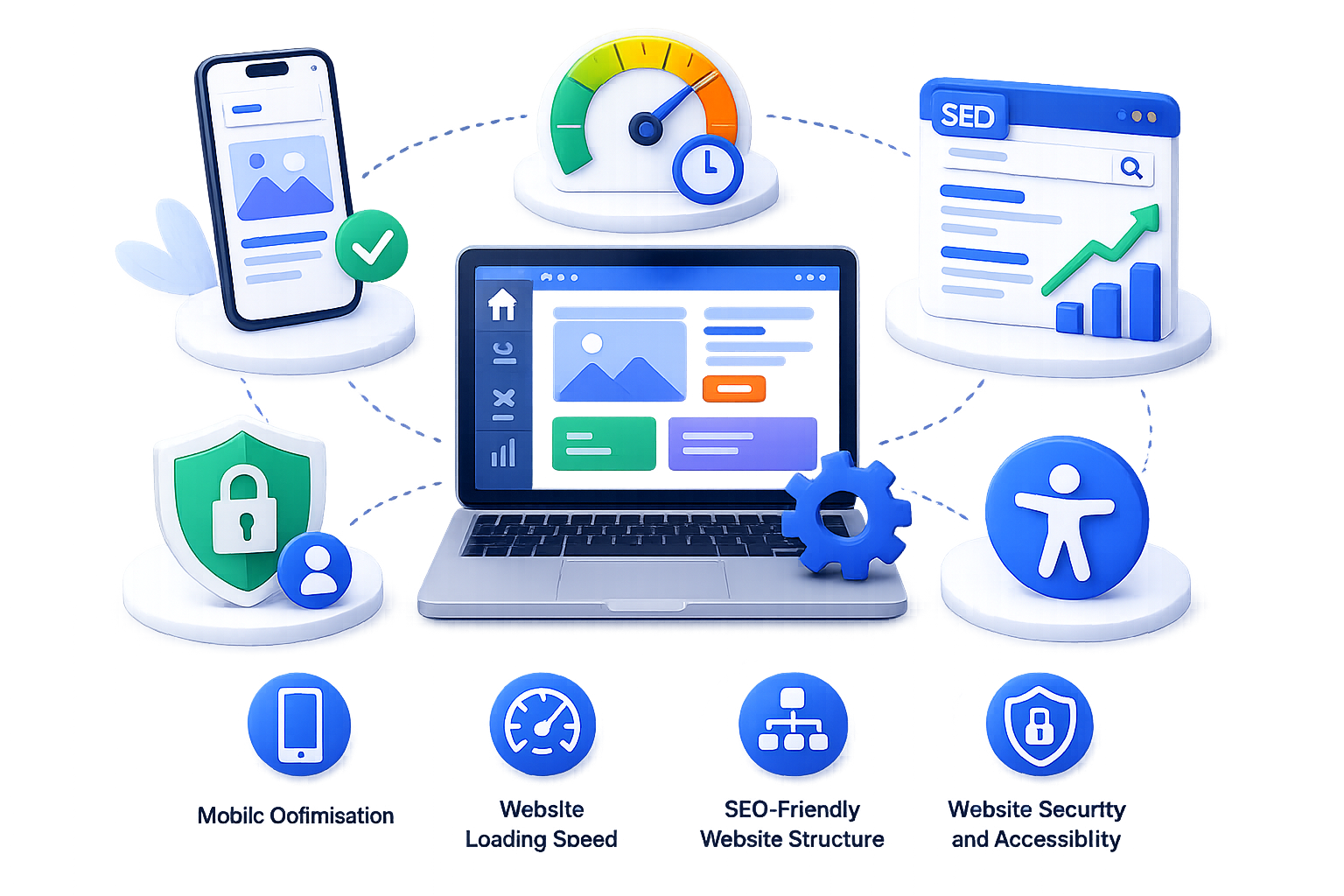
Mobile Optimisation
Most users now browse websites on mobile devices. A dynamic website should work properly across different screen sizes without layout or functionality issues.
Mobile optimisation helps improve:
- user experience
- website engagement
- search engine rankings
Website Loading Speed
Slow websites can increase bounce rates and reduce conversions. Optimising images, code, hosting, and website structure helps improve loading speed. Fast-loading websites also support better SEO performance.
SEO-Friendly Website Structure
A well-structured website helps search engines understand the content more clearly. Clean navigation, proper headings, responsive design, and organised page structure all improve SEO visibility. SEO-friendly websites are easier to crawl, index, and rank on Google.
Website Security and Accessibility
Website security helps protect user data, login systems, and website functionality. Features like SSL certificates, secure hosting, and regular updates help improve website safety. A good website should also be easy to navigate and usable for different types of users.
Need website design services with SEO Optimization? Triumph Digital can be your one-stop solution.
Common Mistakes to Avoid When Designing a Dynamic Website
Poor Website Structure
A confusing navigation structure can make the website difficult to use. Clear page organisation and user flow are important for a better user experience.
Ignoring Mobile Responsiveness
A website that does not work properly on mobile devices can reduce engagement and search engine performance.
Adding Too Many Features
Too many animations, plugins, or interactive elements can slow down the website. It can also make the user experience overwhelming.
Slow Loading Speed
Large files, unoptimised images, and poor coding practices can negatively affect website performance and conversions.
Weak SEO Structure
Missing headings, poor page structure, and unorganised content can make it harder for search engines to understand and rank the website.
Poor User Experience
Complex layouts, unclear buttons, and difficult navigation can reduce user engagement and increase bounce rates.
Weak Security Setup
Ignoring website security can create risks related to data protection, spam, or system vulnerabilities.
Lack of Future Scalability
Some websites are built without considering future growth. A scalable website structure helps businesses add new features and pages more easily later on.
How Triumph Digital Helps Businesses Build Dynamic Websites
At Triumph Digital, we help businesses build dynamic websites that are modern, responsive, and designed for long-term growth. Our focus is not only on visual design but also on functionality, user experience, and website performance.

We help businesses with:
- responsive website design
- custom website development
- CMS integration
- SEO-friendly website structure
- dynamic business website development
- website performance optimisation
Our team works on business websites, booking systems, corporate platforms, and custom web solutions tailored to different industries and business goals.
Conclusion
Designing a dynamic website involves much more than creating attractive pages. A successful website should be responsive, user-friendly, SEO-focused, and built to support long-term business growth.
From website structure and user experience to backend functionality and performance optimisation, every part of the development process plays an important role.
At Triumph Digital, we help businesses create dynamic websites that combine modern design, strong functionality, and scalable development solutions for long-term digital growth.
Ready to build a website that supports your business goals and delivers a better user experience? Contact Triumph Digital today to discuss your dynamic website project and discover solutions tailored to your business needs.